

120 Grit Grinding Wheel
Grinding wheels are discs that contain abrasive particles and grains that have been bonded together to form a wheel shape. Although the disc format is the most common shape, they can also be made in the shape of cones or cups.
Grinding wheels are attached to grinders or saws and rotated at high speeds for a variety of tasks. The abrasive grit and grains in the wheel are able to grind or cut through hard materials such as metal or steel. The abrasive grains are bonded together by either organic or inorganic substances.
Why Choose Us
Rich Experience
Ningbo Dahua Grinding Wheel Co., Ltd. is a well-known Chinese company specializing in researching and producing resin abrasive products. It was founded in 1996 and mainly produces fiber-reinforced resin cutting and grinding wheels, rail cutting and grinding wheels, ordinary resin grinding wheels, fiberglass, etc.
Accept ODM/OEM Service
Based on many years of accumulated industry insight, production experience, innovation capability, and a service network in the abrasive industry, the company can not only offer high-quality customized products but also collaborate with other factories to research, design, and select new materials for new products.
Quality Control
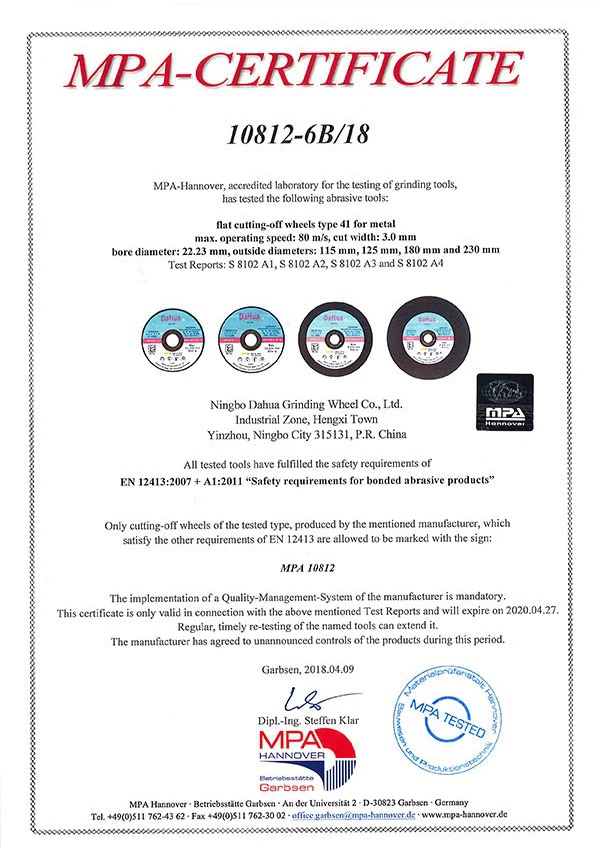
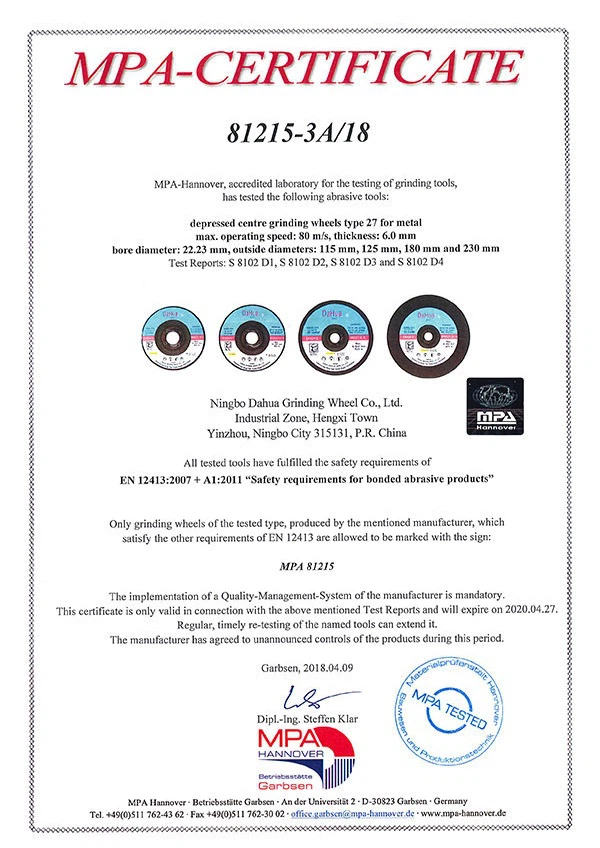
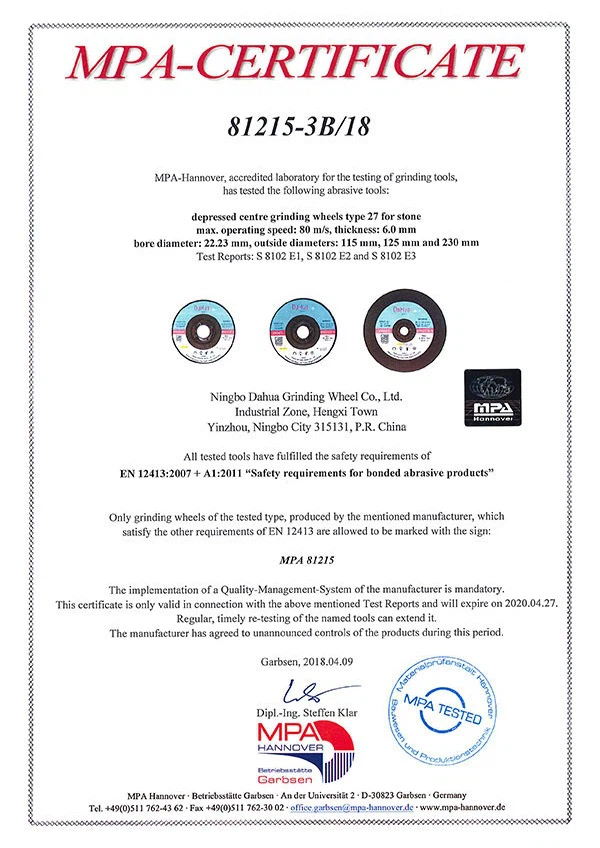
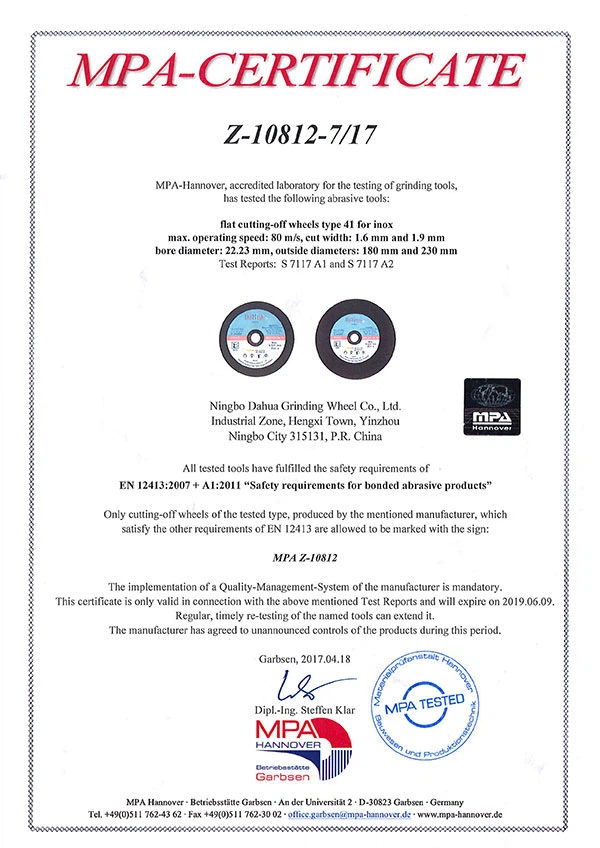
The company has passed the ISO9001 Quality Management System certification and has a comprehensive quality assurance system. The equipment is advanced and reliable. It also has complete raw material inspection, finished product inspection centers, and a quality assurance team to ensure product stability.


Machines That Use 120 Grit Grinding Wheels
Handheld tools and standalone machinery typically use abrasive wheels. They include
● Angle grinders: Also known as disc grinders or side grinders, – used to cut or polish hard materials
● Belt grinders: Mounted table top grinders with two different types of 120 grit grinding wheels on each side, which can sharpen tools and are used for roughing or finishing
● Cylindrical grinders: Used to shape the exterior of rods, tubes or bearing races
● Jig grinders: Heavy machines used for complex grinding and cutting work
● Table saws: Sometimes called bench saws – are used for cutting wood
● Chop saws: Handheld tools used to make straight cuts in wood
● Petrol cut-off saws: Handheld tools used to cut concrete, steel, stone, asphalt and other materials
Applications of 120 Grit Grinding Wheel
120 Grit grinding wheels for angle grinders can be found across many sectors, offering versatile solutions for professionals and diy enthusiasts alike
Manufacturing
Shaping and finishing parts, removing burrs and excess material.
Construction
Cutting concrete, tiles, and other building materials.
Automotive
Repairing and maintaining vehicles, especially in bodywork.
Home improvement
Assisting in tasks such as sharpening tools or grinding rough edges.
What Are the Types of 120 Grit Grinding Wheels
120 Grit grinding wheels are available in a spread of shapes and sizes, and every wheel feature has a different purpose. Some grinding wheel sharpens and cut, while others polish and smooth.
The wheel shape you select should match the sort of application.
Straight grinding wheels
It is the most basic type of grinding wheel available in workshops across the planet. It is most ordinarily used to sharpen tools like chisels and lawnmower blades. You almost certainly have one yourself reception.
Large diameter grinding wheels
Large diameter wheels are somewhat similar to straight wheels, but they're much more extensive. These wide surfaced wheels tyrannize the surface of round objects like carbide blanks. Such grinding wheels are also used for od grinding, especially in the oil and thermal spray industry. These wheels are manufactured up to 36 inches.
Grinding cup wheel
One of the foremost familiar applications of grinding cup wheels is to shine stone or concrete. But with a little enough grit, cup wheels can combat delicate jobs like paint and adhesive removal.
Cup wheels are often used for re-sharpening and finishing for a few applications counting on abrasive size.
Grinding dish wheel
Dish grinding wheels appear as if cup wheels but are shallow and have a thinner surface edge. Their narrow shape allows them to suit into tight crevices a cup wheel would never be ready to reach. They're otherwise used for an equivalent application as a cup wheel.
Segmented emery wheel
The main difference for this wheel is that the abrasive sections are segmented and applied to the wheel rather than having an endless abrasive rim.
When used with cooling or lubricating fluids, these grinders remove large amounts of a fabric fast without damaging your work's surface. Each segment creates a canal that uses force to hold the fluids where it's most needed.
Cutting face emery wheel
Cutting face grinding wheels traverse objects by grinding away material. The width of the grinding edge is typically very narrow and takes tons off directly.
5 Benefits of 120 Grit Grinding Wheels
Exceptional hardness
120 Grit grinding wheels are incredibly hard and wear-resistant, making them ideal for grinding other hard materials such as carbide. This feature also allows 120 grit grinding wheels to withstand high material removal rates and provide better longevity when compared to conventional abrasive wheels.
Superior grinding performance
From rough grinding at high feed rates to cutting brittle materials with high accuracy, the composition of a 120 grit grinding wheel can be manipulated to serve a multitude of applications.
This diversity stems from the combination of grit size and the concentration (or volume) of diamond grit present in the wheel's bond. If finer grit is used, a higher quantity of grit particles can be included in the wheel bond. If larger grit is used, not as many grit particles will be able to fit into the wheel bond.
Low heat generation
The bond structure of a grit grinding wheel does impact its heat-resistant abilities. Resin bonds, for example, generate the least heat overall during grinding and are typically used for softer materials like ceramics and composites. Known as a more "flexible" bond, resin bonds have a faster-paced grit renewal rate than metal or vitrified bonds. This allows for a consistent, sharp cutting surface.
Slightly less heat efficient, metal bonds are typically used for grinding tougher materials and are much harder than resin bonds. By retaining grit particles for longer, this bond allows the form of the wheel to hold its shape for extended periods.
Vitrified bonds are made of ceramic material, ideal for heat dissipation. They are typically suggested for grinding materials with low thermal conductivity.
Regardless of the bond structure, using a 120 grit grinding wheel reduces the risk of heat damage to both the wheel and the workpiece. Synthetic diamond abrasive is highly conductive and chemically inert. This makes it a great material for heat dissipation.
Reduced wheel wear
The unmatched strength and hardness of synthetic diamonds help maintain a sharper cutting edge, resulting in grinding wheels that resist wear and require less dressing throughout a job.
120 grit grinding wheels can operate for long periods with little to no load-up or glazing. This quality results in more efficient grinding, which means more time cutting and less time dressing a wheel.
Efficient grinding greatly reduces the risk of damage to the wheel and workpiece, such as burning, chipping, or breaking.
A wide range of applications
Diamond abrasive is available in various sizes and shapes and can be suspended in many different types of bonds. The possible iterations are almost infinite.
This makes 120 grit grinding wheels an excellent choice for a variety of applications, including machining hard and brittle materials, grinding hardened metals, stone cutting and polishing, tool sharpening, medical supply production, and electronics and optics manufacturing.

A grinding wheel is an abrasive cutting tool. On a grinding wheel, the abrasive acts like the teeth of a saw, but it grinds away the material instead of tearing it away. Shops need to consider a few things when choosing a 120 grit grinding wheel. The first thing to account for is the material you will work with. The super hardened steel most machine shops use can become damaged if you use an inferior abrasive to grind them.
Overheating will cause thermal damage and burns on the workpiece. This feature allows shops to operate the wheel dry and without any coolant, which keeps overhead costs down. If properly cared for, a 120 grit grinding wheel will last much longer than traditional wheels because of its high durability. The strength and durability come from the bonding between the steel hub and grains.
● Achieving rapid material removal and a smooth surface finish, such as in fettling operations, benefits from a coarse-grained, open-structured grinding wheel.
● The final finish largely depends on the grit size used in the wheel.
● Precision grinders equipped with diamond truing and dressing tools can achieve a fine finish while maintaining production efficiency.
● The machine's condition and rigidity are crucial factors, allowing for the use of softer wheels for specific tasks.
● Wheel speed is significant, running a rigid wheel at slower speeds can emulate the characteristics of a softer wheel.

120 Grit Grinding Wheel Maintenance Techniques
Inspection
The first step in maintaining 120 grit grinding wheels is to inspect them regularly. This involves checking for cracks, chips, and other types of damage that may have occurred during use. Visual and dimensional checks can help detect any issues with the wheel. If any damage is found, it is best to replace the wheel rather than attempting to repair it.
Dressing and truing
Dressing and truing are essential maintenance techniques that help restore the 120 grit grinding wheel's shape and improve its performance. Dressing involves removing the dull and worn abrasive particles from the wheel, while truing involves reshaping the wheel to its original form.
Both dressing and truing can be done using various tools, such as diamond dressers and truing stones. It is important to perform these tasks regularly to keep the 120 grit grinding wheel in good condition.
Balancing
Balancing 120 grit grinding wheels is another important aspect of maintenance. An unbalanced wheel can cause vibration and noise, leading to decreased performance and increased wear and tear on the machine. Balancing can be done using a balancer, and it is important to follow the manufacturer's instructions carefully.
Storage
Proper storage of 120 grit grinding wheels is essential to prevent damage and extend their lifespan. It is important to protect the wheels from moisture, dust, and other environmental factors that can cause damage.
Storing the wheels in their original packaging or a protective container is recommended.
Safety precautions
When working with 120 grit grinding wheels, it is important to take safety precautions to prevent accidents and injuries. Personal protective equipment, such as gloves, safety glasses, and hearing protection, should be worn at all times.
Precautions should also be taken while handling and using the 120 grit grinding wheels, such as avoiding overloading, following the manufacturer's instructions, and using the correct speed for the wheel.
Our Factory
Ningbo Dahua Grinding Wheel Co.,Ltd. Is a well known Chinese company specialized in Researching and producing resin abrasive products. It was found in 1996, mainly produce fiber reinforced resin cutting and grinding wheel, rail cutting and grinding wheel, ordinary resin grinding wheel, fiber glass etc. The factory has Industrial Production License and Independent Exporting License. In the past 20 years, it sales to more than 70 countries in the world and the quality of products is universally recognized.
The company passed ISO9001 Quality Management System and has perfect quality assurance system. The equipment are all advanced and reliable. Also, it has perfect raw material inspect, finished product inspection center and quality assurance team to assure the stability of products.
The company awarded National high-tech enterprises in 2012 and awarded Provincial Engineering Technology Center in 2017. It has more than ten Independent intellectual property invention patent and professional R&D team to provide technical support to offer suitable product to the customers. Based on many years accumulation of industrial insight, produce experience, innovate ability and service network in abrasive industry, the company can not only offer high quality customized products, but also study, design and choose new material for new products together with other factory.
The company will go on struggle as always, renew and improve the quality of products constantly, maintain good services and competitive prices. Warmly welcome you to negotiate cooperation and create better business value.

Our Certificate


FAQ
Q: What is 120 grit grinding wheel?
The wheels are generally made with composite material. This consists of coarse-particle aggregate pressed and bonded together by a cementing matrix (called the bond in 120 grit grinding wheel terminology) to form a solid, circular shape. Various profiles and cross sections are available depending on the intended usage for the wheel. They may also be made from a solid steel or aluminium disc with particles bonded to the surface.
Q: What is the life of a 120 grit grinding wheel?
Q: What does the green stripe on a 120 grit grinding wheel indicate?
Q: What should be done before installing a 120 grit grinding wheel?
Q: What does grit of a 120 grit grinding wheel indicate?
Q: How tight should a 120 grit grinding wheel be?
Q: Which PPE is required when using the 120 grit grinding wheel?
Q: What happens to a 120 grit grinding wheel as it wears?
Q: When should you replace a 120 grit grinding wheel?
Q: How can you test a 120 grit grinding wheel for cracks?
Q: What is a 120 grit grinding wheel used for?
Q: What causes a 120 grit grinding wheel to wear?
Q: What does 120 grit grinding wheel grade mean?
Q: How long should a 120 grit grinding wheel last?
Q: When should you throw away a 120 grit grinding wheel?
Q: How do I know if my 120 grit grinding wheel needs maintenance?
Q: What are the precautions of 120 grit grinding wheel?
Q: How long should a 120 grit grinding wheel last?
Q: Do 120 grit grinding wheels wear out?
Q: Are 120 grit grinding wheels safe?
Hot Tags: 120 grit grinding wheel, China 120 grit grinding wheel suppliers, factory, grinding wheel, Grinding Wheel for Milling Machine, 4 5 Inch Diamond Grinding Cup Wheel, Round Edge Grinding Wheel, Convex Grinding Wheel, 120 Grit Grinding Wheel
Send Inquiry
