

7 Inch Cutting Wheel
7 Inch cutoff wheels are perfect for metal slotting, cutting sheet metal, stud or bolt removal, as well as many other metal cutting applications. These discs can be used to cut stainless steel, carbon steel, aluminum, and various other metals.
Why Choose Us
Rich Experience
Ningbo Dahua Grinding Wheel Co., Ltd. is a well-known Chinese company specializing in researching and producing resin abrasive products. It was founded in 1996 and mainly produces fiber-reinforced resin cutting and grinding wheels, rail cutting and grinding wheels, ordinary resin grinding wheels, fiberglass, etc.
Accept ODM/OEM Service
Based on many years of accumulated industry insight, production experience, innovation capability, and a service network in the abrasive industry, the company can not only offer high-quality customized products but also collaborate with other factories to research, design, and select new materials for new products.
Quality Control
The company has passed the ISO9001 Quality Management System certification and has a comprehensive quality assurance system. The equipment is advanced and reliable. It also has complete raw material inspection, finished product inspection centers, and a quality assurance team to ensure product stability.

Our Useful 9 Inch Cut Off Wheel is the perfect example of our commitment to excellence in both materials and manufacturing processes.


7 Inch Cutting Wheel Applications
General fabrication
In general metal fabrication, 0.045-inch wheel diameters are common choices. With thinner materials, an operator may want to choose a 1-millimeter wheel instead for greater precision, less heat generation, and fewer burrs that will require removal before welding. The choice of grain will likely depend on the material composition of the workpiece - higher-performing grains for structural steel and difficult-to-cut metals, contaminant-free wheels for stainless steel.
Pipe fabrication
In metal pipe fabrication, the choice of 7 inch cutting wheel often depends on the diameter of the pipe to be cut. It's also advisable to choose the thinnest wheel possible to minimize heat and friction and to use a type 1 wheel for a deeper cut unless the application imposes a particular constraint. For larger pipe often found on the pipeline, a depressed-center 7 inch cutting wheel provides added clearance when working at a constrained angle, and 0.045-inch wheel thickness is ideal for cutting applications in fabrication yards or on the right of way for field repairs.
Shipbuilding
When an operator is working on the confined, hard-to-access spaces of a ship, making a 7 inch cutting wheel last as long as possible is often a priority. For this reason, the operator will often want to choose a harder, potentially longer-lasting wheel. However, when operators must use air tools whose hoses have stretched over long distances to access difficult areas of the ship, the tools may be underpowered. In this case, wheels with a soft bond will be ideal because they make it easier to maintain a fast cut. In shipbuilding, the work material often influences the 7 inch cutting wheel selection. When working with aluminum, an operator may want to select a 7 inch cutting wheel that will not load or gum up.
Welding preparation
Preparing for welding typically involves exact metal cutting. With a basic cut-off operation, precision is not critical, but with complex work or repairs that need to preserve the initial aesthetic qualities of the material, precision can save time and money. Using a 0.045-inch 7 inch cutting wheel - a little more than a millimeter thick - is common in welding to allow for precise and accurate cuts. For precise cuts on thin sheet metal, profiles, and small diameter rods, a 1-millimeter wheel will provide smooth cutting and exceptional control for clean, ultra-precise cuts.
Railways
Modern railways use hard-to-cut alloy steels, so a high-performance 7 inch cutting wheel is necessary for high-speed gas saws. A self-sharpening zirconia alumina grain that retains a high cutting performance throughout the life of the wheel offers excellent performance.
Construction
Building and construction sites feature a wide variety of metal cutting applications. Operators often look for a wheel that can do it all, from cutting off rebar to making long cuts on sheet metal. Many times, an aluminum oxide wheel provides the right mix of versatility, performance, and price. The line offers both flat and depressed-center 7 inch cutting wheels in various sizes for die and right angle grinders.
These large-diameter 7 inch cutting wheels have several signature wheels designed with the construction industry in mind. For chop saws, the line includes a wheel designed for stud cutting and options for burr-free cutting that feature a single layer of fiberglass.
Correct Positioning of 7-Inch Cutting Wheel and Other Prompts
In addition to paying attention to designations for RPM rating, size, and material, you should also follow these tips when using resinoid-bonded abrasive 7 inch cutting wheels.
● Use the 7 inch cutting wheel at a 90-degree angle, perpendicular to the work surface.
● Apply the proper amount of pressure-not too much, not too little-to allow the 7 inch cutting wheel to do the work. Always avoid pushing too hard on the wheel, which can cause the grinder to stall or kick back or give you a much less efficient cutting action. It also increases the chances that you will slip or lose control of the tool, which can cause damage or injury.
● Choose a grinder with the highest torque or amperage available for the application, as this will help the wheel to do more of the work. For example, instead of using a 4.5-in. wheel on a 6-amp grinder, use a 4.5-in. wheel on a 10-amp grinder. The RPM rating remains the same, but the tool will provide more torque to cut into the metal.
● Choose a tool and consumables that offer quick, consistent cutting, which typically provides the most efficient performance.
● Remember, the thinner the 7 inch cutting wheel, the more susceptible it can be to side loading, which is a term that describes when the wheel bends while moving side to side in the cut. This can turn dangerous if you lean too hard on a wheel, which can cause the wheel to break or jam in the cut. It can also reduce the efficiency of the wheel and increase the cut time.
● Store the wheel in a clean, dry environment, and avoid placing it in water or mud. This helps minimize environmental effects that could degrade its performance or cause it to crack or wear prematurely. The performance of resinoid bond tends to deteriorate when the wheel is stored for extended periods of time, so be sure to use FIFO (first in, first out) when using wheels.
● Inspect the wheel and consumable before each use to check for signs of damage or wear. 7 inch cutting wheels can become harder to control as they wear down. If you can no longer make a safe cut because the wheel's diameter is worn so thin, then the best course of action is to replace it.
Design Properties of 7 Inch Cutting Wheels
● Main types
There are two main types of 7 inch cutting wheels, a type 1 (flat wheel), and the more specialized type 27 (depressed center wheel).
A type 1 cutting wheel is the ideal tool for efficient and general-purpose cutting due to its flat surface. With no depressed center, it maximizes cutting contact and minimizes interference with your workpiece. This allows you to make deep 90-degree cuts into a workpiece without sacrificing accuracy or visibility - something that can be difficult when using other types of wheels!
Although type 1 cutting wheels can slightly reduce the operator's visibility due to their straight profile and close mounting near the guard, they are incredibly beneficial in high-speed saws, stationary saws, die grinders, chop saws, and other types of grinders.
A type 27 cutting wheel is a great choice when you need an extra level of clearance, as it features a depressed center rather than the typical flat design. Not only does this allow for increased maneuverability with constrained angles, but it is also securely held in place by a raised hub.
However, it is important to keep in mind that due to its shape, the depressed wheel may have limited cutting ability when working on corners or around extrusions and profiles.
● Width
Depending upon the tool to be used, cutting wheels are available from 1 inch to 9 inches. The smaller wheels are used with rotary tools and the mid-size wheels (4"-6") are typically used with hand-held grinders, while the larger wheels are used with table-mounted equipment.
● Thickness
The thickness of a 7 inch cutting wheel for steel depends on the specific application and the type of steel being cut. As a general guideline, a thickness between 1/32" inches and 1/4" inches is commonly used for most steel-cutting applications.
Thinner wheels (1/32" to 1/8") provide a narrower cutting surface, which can be an advantage when making precision cuts or cutting through materials with intricate shapes. In addition, they typically allow for faster cutting speeds, because they generate less friction and heat during use.
Thicker wheels (1/4") are more often used on bench-mounted equipment for cutting heavier steel pieces.
Choosing 7 Inch Cutting Wheel Based on Cutting Material
You can choose a 7 inch cutting wheel based on the following important material

Cutting wheel for aluminum
Aluminum is a lightweight metal. Its hardened form is made by processing it with other metals. Along with the various benefits of aluminum, there are also some difficulties while working. Aluminum has a low melting point and abrasive resistant nature. Therefore, cutting aluminum requires a strong cutting wheel that lasts longer and works efficiently.
Cutting wheel for stainless steel
Stainless steel is an alloy ( of iron, chromium, and carbon). This chromium provides a corrosion-resistant coating on metals. Although stainless steel resists rust and oxidation, still precautions must be taken during aluminum fabrication and processing. To avoid contamination of the metal workpiece, you need the right bonded abrasive wheel.


Cutting wheel for hard metals
Cutting hard metal like titanium, hardened steel, nickel alloy, requires a cutting wheel with extensive life and high cut-rate. Ceramic-based cutting wheels are capable of cutting through hard metal with more efficiency.
Cutting wheel for steel
Cutting steel is quite easier than aluminum and stainless steel. Wheel thickness is the most important factor while choosing a metal cutting tool. Thin cutting wheels are a perfect choice for cutting steel. The best thin cutting wheels range from thin 0.045" inch or ultra-thin 1mm.

General 7 Inch Cutting Wheel Safety Recommendations
There are several best practices and recommendations for safe use that apply to cutting wheels of all sizes and types.
● Use the proper guard: Having the correct guard on the tool is an important part of safe cutting wheel use. Right-angle grinders - the tool most commonly used with cutting wheels - typically only come with a Type 27 guard. Cutting wheels, however, are often Type 1 style wheels that require a Type 1 guard, which has half-moon, 180-degree coverage to provide added protection for the operator. Using a Type 27 guard with a Type 1 cutting wheel does not provide that additional protection. Always have the proper guard in place when using a cutting wheel.
● Wear the necessary PPE: Personal protective equipment that should be worn when using a cutting wheel include safety glasses, a face shield, ear protection, gloves, flame resistant clothing, leather apron and safety shoes. Hard hats and/or welding caps can also provide head protection from the sparks that occur during metal cutting.
● Conduct a visual inspection: Before using a cutting wheel, conduct a visual inspection of the wheel and tool. Replace with a new wheel if there are cracks or other signs of wear or damage. Even if the wheel is still on the tool, the tool could have been dropped or knocked off the tool rack, so it's important to always check for damage before use. Also, jog the tool for a few seconds before using it to make sure it's running true.
● Mount the wheel correctly: Most cutting wheels have a stamped metal ring around the wheel hub. The wheel should be mounted with that stamped insert facing the spindle on the motor side of the tool. This will provide a flush mount because there is less chance for grit or abrasive debris to be present on that side of the wheel.
● Secure the workpiece: Be sure the workpiece is held tightly in a vice or clamped so there's no chance it will move, bend or roll once the cut is started. If the workpiece does move during the cut, it could twist and pinch the wheel, potentially causing the wheel to break apart.
● Don't flex a cutting wheel: During a cut, never try to flex or bend the wheel to make a curved cut. This introduces side loading and can fracture the wheel.
● Never grind with a cutting wheel: A cutting wheel doesn't have the fiberglass reinforcement that a grinding wheel does, so it can be dangerous to grind with a cutting wheel. Only use a cutting wheel for cutting. Combination wheels can be used for both cutting and grinding and are marked accordingly.
● Don't push a wheel through a cut: Cutting wheels should only have the weight of the tool as they go through a cut. Forcing the wheel with unnecessary pressure can cause the wheel to slip and bind. Too much pressure also decreases product life.
● Use a better abrasive for harder materials: Some specialty metals like titanium or Inconel can be difficult to cut. In these cases, choose a cutting wheel with a higher-performing abrasive grain like a ceramic. This helps you cut efficiently and reduces the possibility of the wheel glazing due to excessive heat.
● Watch the spark path: Sparks are created with any type of cutting wheel. The spark path can be altered depending on the approach used for the cut. Be mindful of the spark path and any items that could be damaged or coworkers who are in the area.
Our Factory
Ningbo Dahua Grinding Wheel Co.,Ltd. Is a well known Chinese company specialized in Researching and producing resin abrasive products. It was found in 1996, mainly produce fiber reinforced resin cutting and grinding wheel, rail cutting and grinding wheel, ordinary resin grinding wheel, fiber glass etc. The factory has Industrial Production License and Independent Exporting License. In the past 20 years, it sales to more than 70 countries in the world and the quality of products is universally recognized.
The company passed ISO9001 Quality Management System and has perfect quality assurance system. The equipment are all advanced and reliable. Also, it has perfect raw material inspect, finished product inspection center and quality assurance team to assure the stability of products.
The company awarded National high-tech enterprises in 2012 and awarded Provincial Engineering Technology Center in 2017. It has more than ten Independent intellectual property invention patent and professional R&D team to provide technical support to offer suitable product to the customers. Based on many years accumulation of industrial insight, produce experience, innovate ability and service network in abrasive industry, the company can not only offer high quality customized products, but also study, design and choose new material for new products together with other factory.
The company will go on struggle as always, renew and improve the quality of products constantly, maintain good services and competitive prices. Warmly welcome you to negotiate cooperation and create better business value.

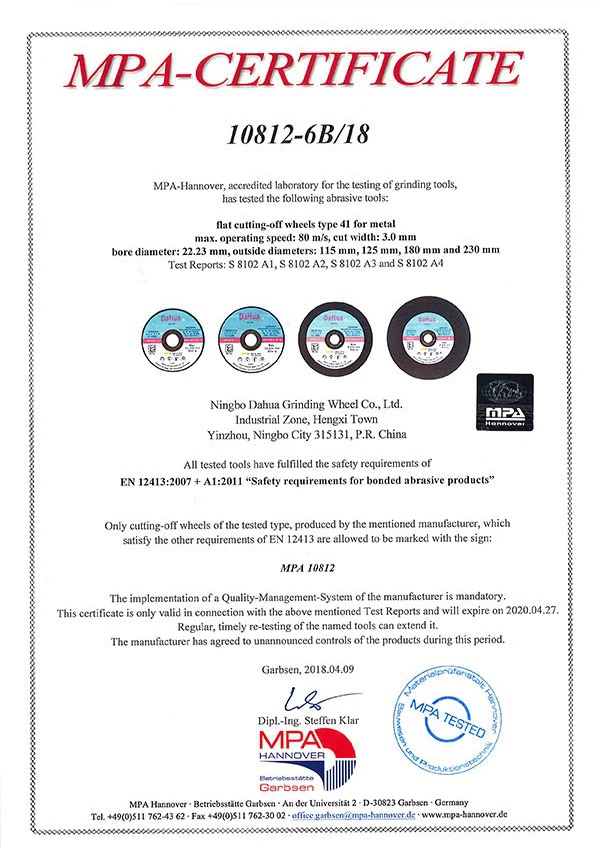
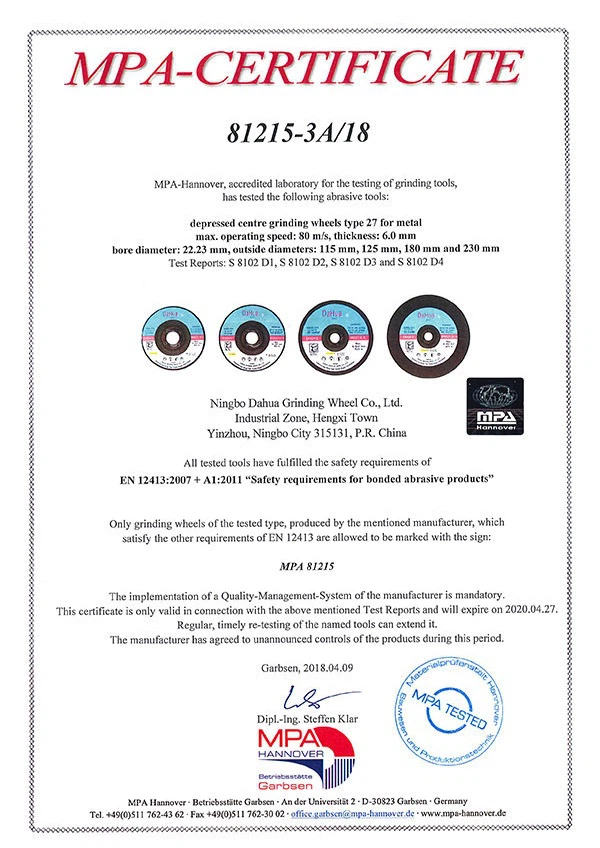
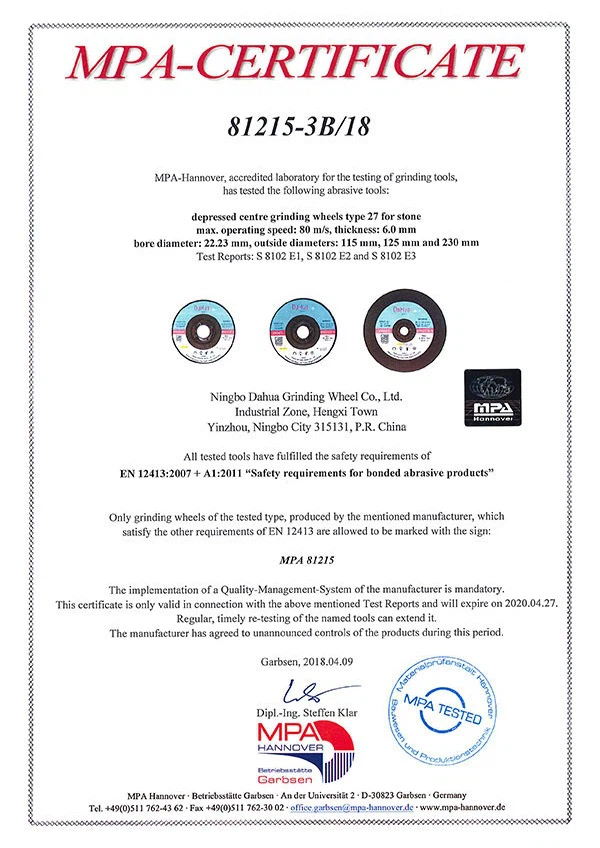
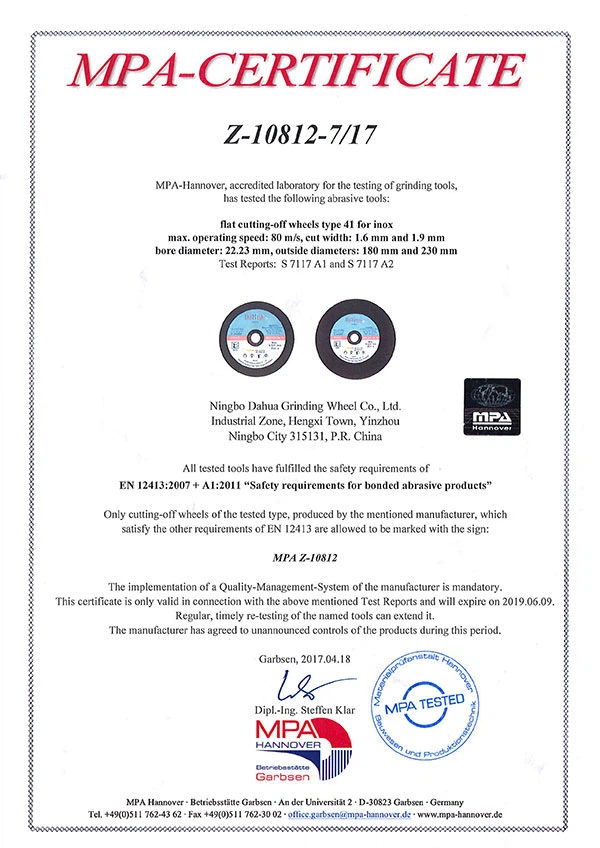
Our Certificate


FAQ
Q: What is 7 inch cutting wheel?
Q: Do 7 inch cutting wheels expire?
Q: Will a 7 inch cutting wheel cut hardened steel?
Q: How many types of 7 inch cutting wheels are there?
Q: Can you use a 7 inch cutting wheel on masonry?
Q: How do you store 7 inch cutting wheels?
Q: Can you sand with a 7 inch cutting wheel?
Q: How do you use a 7 inch cutting wheel?
Q: Can 7 inch cutting wheels be used to grind material?
Q: What is the difference between a type 1 and a type 27 7 inch cutting wheel?
Q: What is a 7 inch cutting wheel used for?
Q: What are 7 inch cutting wheels made of?
The most commonly used abrasives embedded in the resinoid wheels are aluminum oxide and silicon carbide.
Reinforced cutoff wheels are the most durable cut wheels. They are reinforced with fiberglass to provide extra strength to last long and avoid breaking from extra pressure forced on it.
Q: What is the safety standard for a 7 inch cutting wheel?
Q: What is the difference between grinding wheel and cutoff wheel?
Q: Can a 7 inch cutting wheel cut wood?
Q: Can a 7 inch cutting wheel cut stainless steel?
Q: Why do cutoff wheels break?
Q: What thickness cut off a wheel?
Q: Can you put 7 inch cutting wheels on angle grinder?
Q: What is the difference between 40 grit and 60 grit 7 inch cutting wheel?
Hot Tags: 7 inch cutting wheel, China 7 inch cutting wheel suppliers, factory, cutting wheel, Cast Iron Cutting Wheel, Cutting Wheel 6 Inch, 4 Inch Metal Cutting Wheel, 4 5 Concrete Cutting Wheel, 9 Inch Cutting Wheel
Send Inquiry
