

What is the relationship between hardness and grinding? This is a question that often comes up in the industrial and manufacturing sectors, especially when it comes to the use of grinding wheels. As a grinding wheel supplier, I’ve had extensive experience dealing with the intricacies of hardness and its impact on the grinding process.
Understanding Hardness in Grinding Wheels
Hardness in the context of grinding wheels is not the same as the hardness of the material being ground. It refers to the ability of the bonding material in the grinding wheel to hold the abrasive grains in place during the grinding operation. A hard - bonded grinding wheel will retain its abrasive grains for a longer time, while a soft - bonded wheel will release the grains more readily.
The hardness of a grinding wheel is typically rated on a scale. This scale helps users to select the appropriate wheel for a given application. For example, a hard grinding wheel is suitable for grinding materials that are soft and ductile. When grinding a soft material, the abrasive grains on a hard - bonded wheel will not wear down quickly, and they can maintain their cutting edges for an extended period. This is because the soft material doesn't cause excessive wear on the grains, and a hard bond ensures that the grains don't fall out prematurely.
On the other hand, a soft - bonded grinding wheel is better for hard and brittle materials. When grinding a hard material, the abrasive grains will wear out rapidly due to the high forces involved. A soft - bonded wheel allows the worn - out grains to be released easily, exposing new sharp grains. This self - sharpening effect is crucial for efficient grinding of hard materials.
The Impact of Hardness on Grinding Efficiency
The right choice of hardness can significantly improve grinding efficiency. An efficient grinding process is characterized by high material removal rates, good surface finish, and low power consumption.
When the hardness of the grinding wheel matches the hardness of the material being ground, the abrasive grains can cut through the material cleanly. For instance, if you are using a 120 Grit Grinding Wheel to grind a moderately hard metal, a wheel with an appropriate hardness will ensure that the metal is removed at a satisfactory rate. The cutting edges of the abrasive grains will stay sharp for long enough to perform the cutting action effectively, but they will also be released when they become dull to expose fresh grains.
If the grinding wheel is too hard for the material, the worn - out grains will not be released, and the wheel will become glazed. A glazed wheel has a smooth surface where the abrasive grains are no longer cutting, but rather just rubbing against the material. This leads to poor material removal rates, high power consumption, and a poor surface finish. The heat generated during this process can also cause damage to the workpiece, such as heat - induced cracks or changes in the material's microstructure.

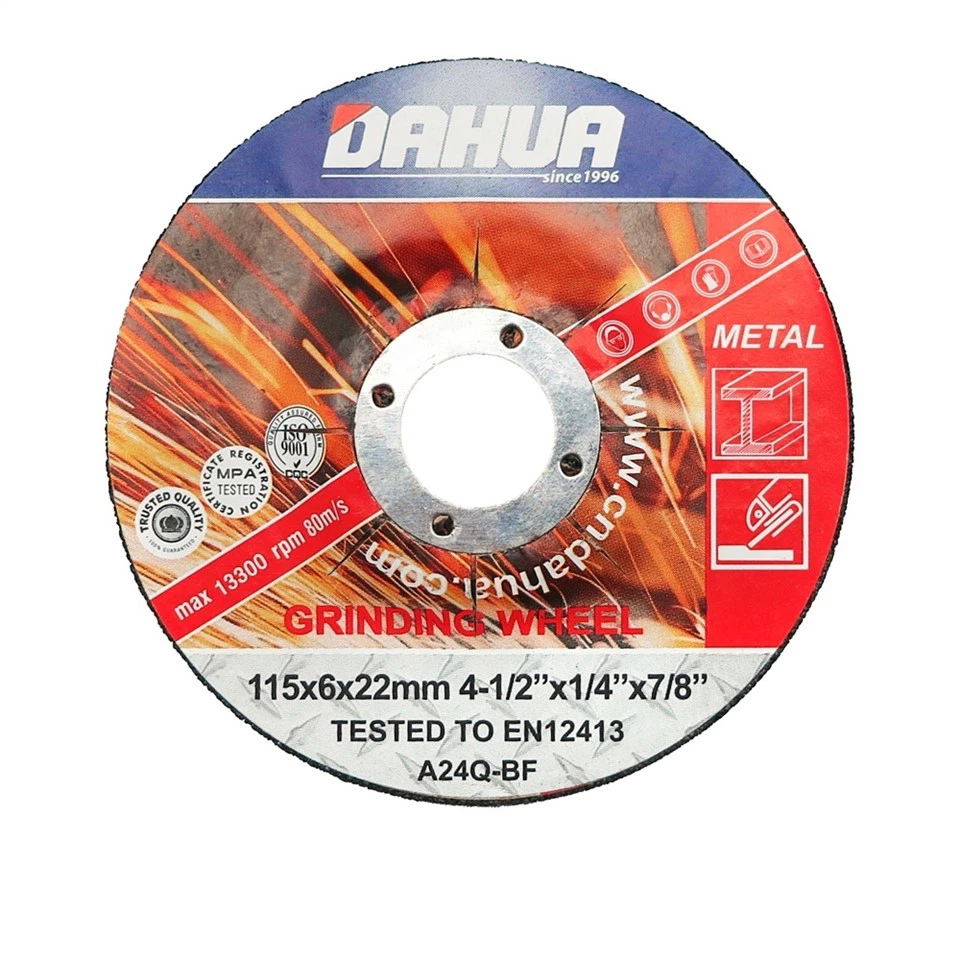
Conversely, if the grinding wheel is too soft for the material, the abrasive grains will be released too quickly. This results in excessive wheel wear, frequent wheel dressing, and an increase in the cost of grinding. The rapid loss of abrasive grains also means that the wheel may not be able to maintain a consistent cutting action, leading to uneven surface finish on the workpiece.
Hardness and Surface Finish
Surface finish is a critical aspect of the grinding process, especially in industries where parts need to meet strict dimensional and surface quality requirements. The hardness of the grinding wheel plays a vital role in achieving the desired surface finish.
A hard - bonded grinding wheel can produce a smoother surface finish on soft materials. The stable abrasive grains on a hard wheel can make fine cuts, reducing the surface roughness of the workpiece. When grinding a soft metal for a precision component, a Grinding Wheel for Sharpening Carbide Tools with a hard bond can provide the necessary control to achieve a high - quality surface finish.
However, for hard materials, a soft - bonded wheel may be required to avoid over - heating and damage to the surface. The self - sharpening nature of a soft wheel helps to maintain a consistent cutting action, which can lead to a better surface finish. It can also prevent the formation of micro - cracks on the workpiece surface that can occur when using an overly hard wheel on a hard material.
Rust and the Role of Grinding Wheels
Rust is a common problem in many industries, especially those dealing with ferrous metals. Grinding wheels can play a crucial role in removing rust from metal surfaces. A Rust Grinding Wheel is specifically designed to handle the task of rust removal.
The hardness of the rust grinding wheel is carefully selected to ensure efficient rust removal without causing excessive damage to the underlying metal. Rust is a relatively brittle material, so a moderately soft - bonded wheel is often used. The soft bond allows the abrasive grains to break through the rust layer easily and be released when they become dull, ensuring continuous cutting action.
When using a rust grinding wheel, it's important to consider the hardness of the metal beneath the rust. If the metal is hard, a wheel with a slightly harder bond may be required to prevent excessive wheel wear and to ensure that the wheel can maintain its shape during the grinding process.
Selecting the Right Grinding Wheel Based on Hardness
As a grinding wheel supplier, I often assist customers in selecting the right wheel for their specific applications. The process of selecting a grinding wheel based on hardness involves considering the hardness of the material being ground, the required surface finish, and the grinding operation itself.
First, determine the hardness of the workpiece. This can usually be done using a hardness testing device such as a Rockwell or Brinell hardness tester. Once the hardness of the workpiece is known, you can refer to grinding wheel selection charts that are available in the industry. These charts provide guidelines on the appropriate hardness of the grinding wheel based on the material's hardness.
Next, consider the required surface finish. If a smooth surface finish is required, a harder - bonded wheel may be suitable for soft materials, while a softer - bonded wheel can be used for hard materials. Also, think about the type of grinding operation, such as surface grinding, cylindrical grinding, or centerless grinding. Different operations may require different wheel hardnesses to achieve optimal results.
Conclusion
The relationship between hardness and grinding is complex but essential to understand for anyone working in the field of metalworking and manufacturing. The hardness of the grinding wheel has a direct impact on grinding efficiency, surface finish, and the overall quality of the workpiece.
As a grinding wheel supplier, I am committed to providing high - quality grinding wheels that are designed to meet the specific needs of our customers. We have a wide range of grinding wheels, including Rust Grinding Wheel, 120 Grit Grinding Wheel, and Grinding Wheel for Sharpening Carbide Tools.
If you are in need of grinding wheels or have questions about the relationship between hardness and grinding, please feel free to contact me. I am here to help you select the right grinding wheel for your application and ensure that you achieve the best possible results in your grinding operations.
References
- Malkin, S. (1989). Grinding Technology: Theory and Applications of Machining with Abrasives. Society of Manufacturing Engineers.
- Trent, E. M., & Wright, P. K. (2000). Metal Cutting. Butterworth - Heinemann.